Paul Heinz

Original Fiction, Music and Essays

Filtering by Category: Music

Hodgson in Milwaukee
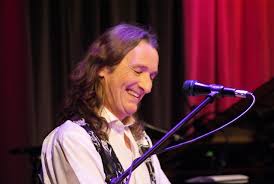
Prior to his performance on Saturday night at the Northern Lights Theater in Milwaukee, I hadn’t seen Roger Hodgson grace the stage since his final tour with Supertramp in 1983, and it was hard to believe the same man could belt out the same tunes as forcefully as he had three decades ago.  Sporting a white shirt and black vest, Hodgson alternated between keyboards and acoustic guitar, backed up by a four-piece band and a largely superfluous 17-piece orchestra. 

Beginning with “Take the Long Way Home,” Hodgson stuck largely to his Supertramp repertoire, performing each of his songs from 1974’s breakout album Crime of the Century and the mega-hit Breakfast in America, along with several from the intervening albums.  Particularly surprising were the inclusions of “Easy Does It” and “The Two of Us” from 1975’s Crisis?  What Crisis?  Notable absences on this particular evening were songs he performed on other nights of his four-night run in Milwaukee: “A Soapbox Opera” and “Even In the Quietest Moments.”  That he mostly ignored his solo career was a little disappointing, as I would have loved to have heard “Had a Dream” and “In Jeopardy” from his debut solo album, and I wish the Supertramp song “Crazy” would have been part of the setlist.  Also oddly absent from the evening was electric guitar.  Hodgson is a master at the tasteful solo or well-placed wail – placing him in the same category as David Gilmore – but these parts were instead arranged for the orchestra, whose presence was most appreciated on “Fool’s Overture,” Hodgson’s epic composition from 1977, and “Hide in Your Shell” from Crime of the Century. 

Roger seemed genuinely pleased at both being able to perform his old material at such a high level and by the audience’s reaction.  Supertramp made their North American debut in Milwaukee, and back when radio stations had more leeway to support particular artists, Milwaukee was one of the band’s hubs.  Hence the four successive shows at Northern Lights, an intimate theater that allowed Roger to give special dedications and wishes to various members of the audience between songs.  When he was with Supertramp, Hodgson and fellow singer/composer Rick Davies yielded audience interaction duties to saxophonist John Helliwell.  Now Hodgson takes on these duties himself, and he seems more comfortable in his own skin today than when he was at the height of his career. 

Hearing Hodgson’s band faithfully reproduce the parts originally played by Dougie Thomson, Bob Siebenberg, John Helliwell and Rick Davies only made me appreciate how adept the original band was at creating a “sound.”  Tastefully understated parts made the whole bigger, and though they may not have been household names, these guys what they were doing.  Current woodwind virtuoso Aaron Macdonald blew through recognizable solos from tunes such as “The Logical Song” and “It’s Raining Again,” and it highlighted how innovative and integral John Helliwell’s contributions to the original band were.  Drummer Bryan Head played behind a drum shield of Plexiglass, and while this may help with sound separation, it was visually unappealing.  More intricate bands have managed happily without one, and I wish sound engineers would employ other techniques to improve their live mixes.

Back in 1979, when Supertramp temporarily ruled the Billboard charts, “Take the Long Way Home” was a favorite of mine, but when I heard Hodgson sing it on Saturday, the following lines hit home harder than they ever had before:

When you look through the years and see what you could have been

Oh, what might have been

If you’d had more time

When I last saw Hodgson in 1983, I was fifteen, and the world’s expanse was limitless, the future so vast, I could hardly contain the very thought of it, my arms unable to open wide enough to embrace what lay ahead.  I no longer feel that way.   I suspect Roger doesn’t either, but it was cool to see a man happy to revisit the past for an evening and share it with an appreciative audience.

An Evening Listening to Music

How much music can you listen to in one evening?  A crap-load, and some of the following songs might even be categorized as crap (Glenn Fry, anyone?).  On a recent Friday evening in Kevin’s “Wall of Sound,” five of us gathered to play music, commiserate, and ask important questions like why artists insist on talking politics during concerts (my favorite example: Rufus Wainwright in 2004 telling the audience, “We need to get rid of Bush.”  My friend turned to me and said, “Rufus isn’t even a U.S. citizen!”).

Peruse the list, and excuse and typos and errors.  I believe there was some drinking going on this particular evening, but I can’t remember.

Warren Zevon – Raspberry Beret

Henry Lee Summers – Just Another Day

Prince – Pop Life

Kodaline – Brand New Day

The Band – Ophelia

Smithereens – Crazy Mixed Up Kid

Icehouse – Nothing too Serious

Everly Brothers – Gone, Gone, Gone

Robert Hazard – Escalator of Life

Lou Reed – Satellite of Life

David Bowie – Sound and Vision

Frank Black – Calistan

Devo – Satisfaction (I Can’t Get No)

Guadalcanal Diary – Litany

Robbie Robertson – Somewhere Down that Crazy River

Robbie Robertson – It’s A Good Day to Die

Richard Thompson – 1952 Vincent Black Lightning

Cheap Trick – I Know What I Want

Silversun Pickups – The Pit

David Bowie – Soul Love

Jon Astley – Jane’s Getting Serious

Jeff Buckley – Grace

The Firm – Someone to Love

Rhythm Core – Common Ground

Warren Zevon – I was in the House When the House Burned Down

Jane’s Addiction – Standing in the Shower Naked

Al Stewart – On the Border

Glenn Frey – You Belong to the City

Off Broadway – Full Moon Turn My Head Around

Rickie Lee Jones – Last Chance Texaco

The Church – Under the Milky Way

No Doubt – Spider Web

Tom Petty – Change of Heart

A-ha – Cry Wolf

Edie Brickell – Little Miss S.

Jimi Hendrix – Bold is Love

Four Non Blondes – What’s Up

Innocence Mission – Deep in this Hush

Bob Mould – Wishing Well

The Crystal Method – Name of the Game

Jimi Hendrix – If 6 Was 9

Subdudes – Late at Night

Paul Simon – How Can You Live in the Northeast

Jail – The Stroller

Tears for Fears – Mad World

AC/DC – Long Way to the Top

Keane – Broken Toy

Jimmy Buffett – I Don’t Know (Spicoli’s Theme)

Psychedelic Furs – Ghost In You

The Doors – The Soft Parade

Supertramp – The Meaning

INXS – One Thing

Seal – Prayer for the Dying

Led Zeppelin – Custard Pie

The Cult – Rain

The Kinks – Destroyer

ELO – Do Ya

Little River Band – Lonesome Loser

Joe Jackson – Cosmopolitan

?? – ??

April Wine – Talk of the Town

Marking Time with Music

(note: this originally posted on www.planetback.com in 2008.  I've editted it for this posting)

Quick.  What’s the first thing that comes to mind when I mention the year 1979?  A birthday?  A graduation?  Your first kiss?  A song by the Smashing Pumpkins?  If you’re like me, and God help you if you are, your mental timeline is marked not so much by life’s personal milestones, but by album release dates.  It’s my way of attaining order in a random universe. 

Take the year 1975.  Springsteen’s Born To Run and Led Zeppelin’s Physical Graffiti come to mind, though I was only seven years old that year.  Age doesn’t really matter when it comes to marking time (at least it didn’t until I turned forty); I’ve retroactively pegged years from long before my birth.  1954?  Bill Haley’s “Rock Around The Clock” (not an album, per se, but you get the idea).  1967?  The Beatles’ St. Pepper and Hendrix’s Are You Experienced.  Of course, more recent years have the added benefit of intertwining personal experience with album release dates.  Peter Gabriel’s So and Paul Simon’s Graceland came out the year of my high school graduation, and Ben Folds Five and Alanis Morissette both debuted albums in 1995, the year I was married.

1979 stirs up memories of my very first album purchases.  I started boldly, with a live double album from Aerosmith, graduated to Supertramp’s Crime of the Century and Led Zeppelin’s In Through The Out Door, and finished off the year with Pink Floyd’s magnum opus, The Wall.  This was the album that had everybody talkingWhatever side of the Floyd fence you fell on, there was no disputing The Wall’s significance. 

Memories of my family’s trip to Florida the following spring are inextricably linked to the unwavering play lists of rock stations from Milwaukee to Tampa: “All of My Love,” from Zeppelin, “The Devil Went Down To Georgia” by Charlie Daniels (with the phrase “son of a gun” replacing “son of a bitch” for radio play – oh the innocence!), and the ubiquitous “Another Brick In The Wall, Part 2.”  This is the Floyd song that features a disco beat and a children’s choir singing “We don’t need no education” (both moves a stroke of production genius).  It was an unmelodic piece, almost childish, but that didn’t stop me from buying the sheet music to expand by blossoming piano repertoire.  When I handed the music to my appalled piano teacher, Mrs. Trotier, she produced a sigh that could have signified the end of society, but to her credit, she helped me plod my way through the song, deciphering the complicated rhythms of David Gilmour’s transcribed guitar solo.

Meanwhile, schoolteachers from all around the country feared mutiny.  The lyrics to “Another Brick In The Wall, Part 2” clearly had appeal to any student with an ounce of deviance, but my sixth grade teacher, Mr. Middlestead, didn’t quite see it that way.  He decided to facilitate a class discussion on the topic, an admirable move except when considering his audience.  He copied the song’s lyrics on the chalkboard at the front of the classroom and asked the students to read along while the song played.  After pressing stop on the tape player, he asked, “What is it about this song that you find appealing?”

We offered nothing except shoulder shrugs and blank stares.  None of us really knew why we liked the song.  We just did.  It was on the radio, and it was sort of funny.  But no one was brave enough to say so.  Finally, after watching my teacher die a slow death in front of the classroom, something inside me – probably vanity – provoked me to speak up. 

“This song isn’t even as good as the other two.  Part 3 is way better.”  I was referring to an almost identical song with slightly different lyrics on the album’s second side. 

My teacher’s eyes widened.  “That’s what I’m trying to get at.  You think this is the worst of the three ‘Another Brick In The Wall’ songs, and yet this is the one that’s attracted so much attention.  Why?”

“I don’t know…but Part 3 is really cool.  It starts out with a guy smashing his TV!” 

I raised my hands to mimic the action, but halted when Mr. Middlestead placed a hand on his forehead.  Then, starting to sense my own death, I turned to my classmates for support and distinctly remember Jon Lewis giving me a look that he’d previously reserved for the class dork.  I had just doubled the number of dorks in our classroom and completely negated any crumb of respect I’d garnered from my classmates all year. 

Damn you, Roger Waters!

So what’s the upshot of all this?  Nothing really, except to say that while 1979 is a highlight in my mental timeline, and could be for almost any music fan, I don’t imagine today’s kids will look back at the year 2014 with the same fondness.  And that’s not just because I’m an old guy hankering for the old days; today’s kids are already wallowing in the past.  Look around and you’ll see teenagers wearing t-shirts with the logos from Zeppelin, Rush, The Who, Nivana and the Stones.  It reminds me of a conversation I had at a party back in 2008 when a familiar song began to play in the background. 

“Oh, I like this song,” a woman said.

“Yeah, Warren Zevon,” I said.

“Who’s Warren Zevon?”

“The guy who does this song.”

“No.  It’s someone else.  Kid somebody?”

“It’s Warren Zevon.”

And then a voice began singing an alternative melody right on top of Warren Zevon’s original classic!  So all 2008 had going for it was a hit by Kid Rock based on based on samples of two songs from long ago: Lynyrd Skynyrd’s “Sweet Home Alabama” from 1974 and Warren Zevon’s “Werewolves of London,” from 1978. 

Wallowing in the past.

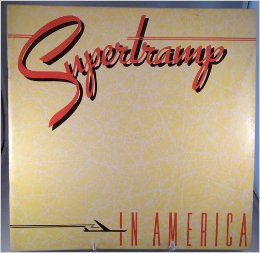
Supertramp, 1979

1979.  The year of The Knack, Led Zeppelin’s first album in over three years, 52nd Street, Tusk, The Long Run, and…

Breakfast in America

Living in Milwaukee in 1979, there was nobody bigger than Supertramp.  Already mainstays of Milwaukee radio from their previous three releases, Supertramp was kept in constant rotation on WQFM and WLPX, with “Logical Song,” “Goodbye Stanger,” “Breakfast in America,” “Take the Long Way Home” and “Lord Is It Mine” all making the airwaves.  Supertramp played at Mecca Arena on March 22, and then returned to Alpine Valley for three consecutive shows on June 15-June 17, just a week after exiting the Billboard best-selling album ranking (only to return a week later).

The tour culminated six months later in Paris, after selling over four million copies of Breakfast in America in the US alone, the fifth-best selling album that year, eventually winning the Grammy for the best engineered recording.  The Paris show was recorded and subsequently released as a live LP, and though the concert was also filmed, it wasn’t made available in video.  This glaring omission in rock concert libraries has now been rectified, as the show is now available on DVD and Blue Ray.

I missed the 1979 tour.  As an 11 year-old, too young to see rock concerts, I was filled with jealousy when my brother returned home from one of the Alpine Valley shows with a t-shirt in hand.  I made the next Supertramp concert at Alpine Valley on August 28, 1983, for what would be Roger Rodgson’s last tour with the band, and I have terrific memories of Bob Siebenberg starting the show with the kick drum from “Don’t Leave Me Now” as a giant tightrope walker appeared on the film screen behind the stage and the band launched into the song “Crazy.”

Watching the Breakfast in America DVD last night brought back fond memories of that show, but I was also able to watch the band with perhaps a more discerning eye than back in 1983.  A few thoughts:

  • Davies and Hodgson have no stage presence whatsoever.  Hodgson sings most of his songs with his eyes closed, and Davies has a twitch that makes him look like he’s expending the greatest of effort even when he’s playing the simplest of keyboard parts.  I remember both of the band leaders having little to no interaction with the audience in 1983 as well, with the exception of Hodgson announcing his decision to leave the band (just before playing "Give a Little Bit").
  • John Helliwell, in addition to being a great woodwind and keyboard contributor, is the voice of the band, adding a much needed sense of humor and dialogue with the audience.
  • Hodgson is a very underrated guitarist.  I liken him to David Gilmore; perhaps his chops aren’t extraordinary, but his choice of notes and sounds are flawless.  Just hearing him play the tasteful guitar solo in “School” was enough for me to take notice, and I still love his work at the end of “Goodbye Stranger.”
  • The stage setup is interesting, so that even though Davies only plays keyboards (and harmonica), he positions himself in one of four different places on the stage: one for the front stage Wurlizer, one for the grand piano, one for the Hammond and other keyboards stage left, and another keyboard setup that allows for Hodgson and Helliwell to have easy access during songs that require guitar and woodwinds.  In effect, you have three of the five members moving around regularly, which makes for a more fulfilling visual experience.
  • The highlight of the concert for me is the inclusion of “Another Man’s Woman,” a Davies tour de force and completely unexpected.  Hodgson’s understated guitar work during this song is another example of how less is more.
  • Perplexingly absent from the set list are Davies’s contribution to Supertramp's latest release.  Only one of his songs from Breakfast in America is performed, the hit “Goodbye Stranger.”  In the notes from my concert program for the …Famous Last Words… tour, is states, “Rick Davies was so sure that Breakfast in America would not reach the top 5 on the American charts that he bet Bob Siebenberg $100 that it wouldn’t.”  Perhaps he didn’t really like the tunes from this record, which would explain why he played all four of his songs from Crime of the Century, but only one from the best-selling album in the band’s history.
  • The screen behind the stage is used fleetingly, and I suspect this was a rather extravagant and expensive proposition in 1979.  On the DVD, film is used only for the songs “Rudy,” “Fool’s Overture” and “Crime of the Century.”  When I saw them in 1983, I recall them using the screen for "Crazy" and “Child of Vision” as well.
  • Why the cameras didn’t roll during “Ain’t Nobody But Me,” “From Now On,” “A Soapbox Opera,” “You Started Laughing” and “Downstream” is a mystery, and one wonders if Rick’s contributions to the band were overlooked in favor of the hit-making Hodgson, since four of the five missing tracks are Davies songs.  Luckily, the audio is included for these tracks as a DVD extra.

The legacy of Supertramp has been minimized in my mind due to Hodgson’s departure in 1983, a few uninteresting albums since that time, a lot of extended time off, and the inability of Davies and Hodgson to come to a settlement that would culminate in a reunion tour.  Other bands have stayed relevant without new material (The Beatles, anyone?  Or Billy Joel?), but one has to wonder if Supertramp is one of those bands that’s going to disappear entirely from people’s playlists in the next ten or twenty years.  If so, it’ll be a shame, because Supertramp had a remarkable knack for walking the balance beam between creativity and accessibility.  There is no reason in the world that a song like “School” should have gotten radio play, and yet it did.  Supertramp achieved something remarkable, and I have to wonder if after the inclusion of Heart into the Rock and Roll Hall-of-Fame last year, if they shouldn’t be considered.  I doubt it'll happen, but if the year 1979 is any indication of the band’s impact on the music world, perhaps it should.

Aging Like Peter Gabriel

Aging can be scary.  Just ask my daughters about Peter Gabriel.  But first, a little background…

In 1994 I mentioned to my friend Julie that I thought my hairline was starting to recede.  “Well, duh!” was her response.  Apparently, I was the last to know.  Or maybe the last to know was Alice, my wife, because I managed to snare her prior to my long descent into baldness.  2013 helped spur the aging process, as I put on about seven pound and purchased my first pair of reading glasses.  I figure it’s only downhill from here.  There are exceptions to men aging in unattractive ways: say, George Clooney, Cary Grant, and every man who’s ever played James Bond.

But for me, I think I’m going to go down the path of Peter Gabriel (except for the world stardom part).

Gabriel didn’t really reach world stardom until his album So in 1986 when he was thirty-six years old, a fairly elevated age for a rock performer’s peak, but even six years later, when he toured behind his follow-up album Us and sang about aging issues like divorce, he looked good.  Svelte.  Tireless.  Exuberant.  When my daughters were young, we would play Gabriel’s Secret World DVD over and over, mesmerized by the visual spectacle of the show as much as the musical performances.  Still own it.  Still love it.

And then…

As Gabriel is wont to do, he stayed largely hidden from public view for a number of years, but appeared in 1999 at the Academy Awards to sing Randy Newman’s song “That’ll Do” from the movie Babe - Pig in the City.  You could almost hear the audience gasp as he came onto the stage.

Check out the reaction that people shared on-line immediately following the Oscars (under the heading “Peter Gabriel YIKES”).

My favorite line is: “My husband came into the room and asked me why Marlon Brando was singing.”

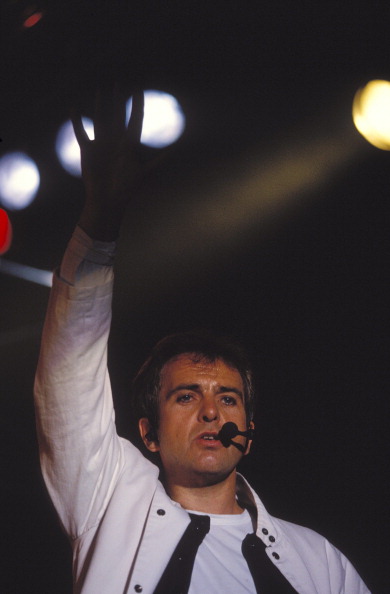
Big deal, right?  People age.  Except it was only SIX YEARS AFTER the Secret World tour!  The man went from this…


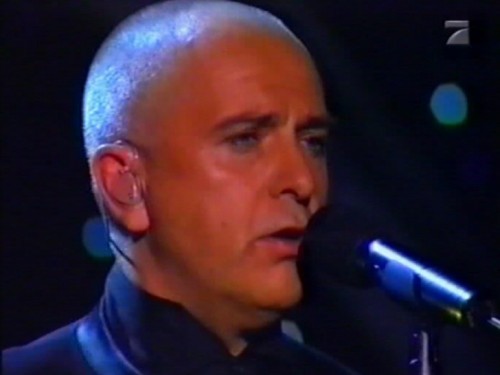
…to this…

...from the age of 43 to 49!

I’m 45, smack dab in the middle of the road that goes from “tolerable looking” to “ewww”.

Four years after Gabriel’s Oscar performance, I rented the DVD of his Up tour, excited to once again show my daughters an inspiring Peter Gabriel concert.  I don’t want it to sound like I’ve raised two shallow-minded girls, but they practically cowered while watching the hairless, bloated figure on screen.  They were only six years old, but they knew a cover up when the saw one.

“This is the same man?” they asked.

“It is.”

“Are you sure?” 

I wasn’t.  They went back to playing with their Barbies, and I finished the DVD, searching for a melody in tunes like “More than This” and “Growing Up.”  It was as if the songs had suffered the same fate as their creator, plodding along, suffocating beneath their own weight.

It’s said that people see themselves at a certain age, frozen in time, and are shocked and betrayed when the mirror shows their true age.  But better to live by that internal age then the external one.  Better to be surprised when looking into the mirror than validated.

I guess that's the trick.  So I've decided I'm going to live like I'm twenty-one and see what happens. Should be divorced and homeless within a month's time.

Copyright, 2026, Paul Heinz, All Right Reserved