Paul Heinz

Original Fiction, Music and Essays

Filtering by Category: Music

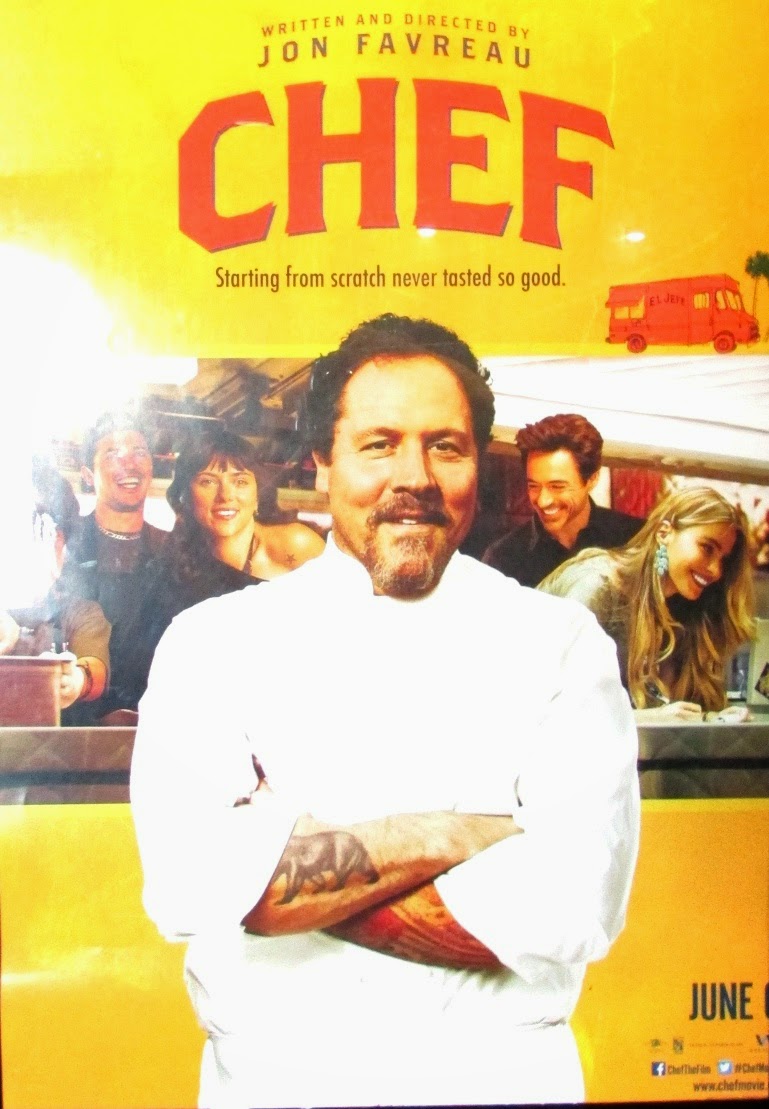
The Movie, Chef

When Jon Favreau made his big splash in the movie Swingers back in 1993, who could have predicted that he’d be playing a supporting role on TV’s Friends just a few years later?  The guy was clearly destined for bigger things.  Fortunately, since then he’s managed to carve out a nice resume of screenwriting, acting and directorial credits (Elf, Iron Man) and in his latest movie, Chef, he does all three in an absolute gem of a film.  I haven’t had this much fun at a movie all year. 

Favreau plays Carl Casper, a professional chef in LA who finds himself compromising his art due to restaurateur Dustin Hoffman’s insistence that he stick to the tried and true.  A novice at social media, Casper learns just enough from son Percy (Emjay Anthony) to become dangerous, and a series of self-induced mishaps – culminating in a videotaped tantrum in front of food critique Ramsey Michel (Oliver Platt) – puts him back on the job market, lost and uncertain of what to do next. 

At the prodding of Casper’s ex-wife, played by Sofia Vergara, Favreau and son begin a new business in Miami on a food truck, assisted by former line chef, Martin (played by the incomparable John Leguizamo).  They city-hop across the country, learning a few things along the way about fatherhood, work-ethics, and how to use social media as one’s advantage.  More importantly, the plot allows Favreau to show us his love affair with Miami, New Orleans and Austin, and the music and food that makes these cities come alive.

Favreau could have taken many predictable turns that would have made Chef yet another contrived Hollywood mess, and true, things are sewn up a little neatly at the film’s end, but the journey along the way is such a terrific romp, both sweet enough and irreverent enough to rope in my 12 year-old son (which ain’t easy), that a little contrivance toward the end is acceptable.  It’s not often a movie balances things so well (Favreau’s excellent Elf is one example), and Chef lends credence to the notion that a well-done character-driven film is often more interesting than a plot-driven film (though having both is even better).

Big name stars Robert Downey, Jr., Scarlett Johansson and Dustin Hoffman (not to mention Oliver Platt) all land terrific performances in small roles, but Leguizamo, sous chef Tony (Bobby Cannavale) and Favreau steal the show, along with Favreau’s father-son relationship with Anthony.   The dialogue seems natural and unforced, and Favreau’s obvious love of cooking shines, as he affectionately devotes numerous scenes that reveal just how much effort people are willing to expend – all for the pleasure of a fine meal. 

Are We Entitled to Make a Living Doing What We Love To Do?

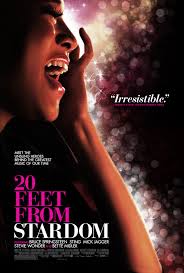
The movie 20 Feet From Stardom – and if you haven’t seen it, you should – has sparked many conversations with my musical brethren, most of whom point to two scenes that they found particularly poignant, both involving the amazing vocalist Merry Clayton.  Never heard of her?  Don’t worry about it.  You have, in fact, heard her. 

The first aforementioned scene shows Clayton and Mick Jagger listening to the isolated vocal track of Clayton’s performance on The Rolling Stones’ song, “Gimme Shelter.”  It’s one of those performances that summons emotions in me that I’m unable to put into words.  Hearing the track, coupled with watching the singers respond to it, gave me chills and brought me to tears.  Just thinking about it gives me the chills.  Not too shabby for a song I’ve probably heard a couple hundred times.

The second scene has Clayton recalling how her attempts at stardom in the 70s resulted in three albums that sold poorly.  She says, her voice cracking, “I felt like if I just gave my heart to what I was doing, I would automatically be a star.”

No one could blame her or countless others for this belief.  After all, we hear it all the time: Follow your dream.  Do what you love.  Cinderella sang about it.  So did Aerosmith and a thousand other bands.  Hell, even I’ve written about it. Graduation speeches promote it.  Websites are devoted to it.  An industry of inspiring posters capitalizes on it.  It’s what parents want for their children.  It’s what children want for themselves when they become adults.  And I think there’s a kernel of good advice in that sentiment.  Do what you love to do.

And yet…

Are we entitled to make a living at it?  What a luxury it is to even be asking the question! In the history of humankind, how long has this idea of doing what one loves to do for a living been given even the slightest consideration?  For me, it brings to mind centuries of apprentices toiling in atrocious working conditions, slaves enduring worse, millennia of farmers laboring over the land, generations of immigrants, past and present, suffering through the most strenuous jobs for the littlest of pay.

I wonder how many people historically have had the luxury of saying, “I want to do this for a living.”  How many people living today can devote a realistic thought to the notion?  The starving worry about food, the terrorized worry about safety, and the poor worry about making a better living. 

So the fact that some of us are able to entertain the notion of doing what we love to do is already a blessing of blessings.  Let’s start there.  But should we be able to make a living doing what we love to do?  Well, that all depends, doesn’t it?  I could get into an analysis I suppose of capitalism, supply, demand, education, market saturation, etc., but what it all comes down is that sometimes jobs are in demand, sometimes they aren’t, and sometimes there’s never demand for what you love to do. 

Our grandparents, especially those who were the first in their family to go to college, probably didn’t give this a second thought, and majored in what was going to guarantee them a job. Right now, it seems like nursing is a good profession to go into.  I have a niece pursuing this as I write, and her prospects look good.  In a decade, who knows?  Engineering looks very promising at present.  Architecture, not so much. Then again, I know an architect in Milwaukee who is living her dream.  You just never know.  The entertainment industry, of course, is even more fickle.  Some musicians can make a decent living at it.  Others become superstars.  Others still can barely get by.  It isn’t fair, but that’s the way it is.  In 20 Feet from Stardom, singer/songwriter Stings says, “It’s not about fairness.  It’s not really about talent.  It’s circumstances.  It’s luck.  It’s destiny.  I don’t know what it is.”

And shouldn’t this be the case?  After all, if I could make a living watching baseball on TV, I would do it in a heartbeat.  I know people who love to fish.  Does that mean they should be earning a living at it?  I know people who love nothing more than to play a round of golf.  Does that mean they should get paid for it?

For me, I think the answer is this: do what you love.  Pursue it.  Immerse yourself in it.  And if you’re able to, do it for a living.  But either way, don’t stop.  I stopped playing music and writing fiction for a while back in ’94 and ’95, and then again in the early 2000s.  You know what?  I found myself out of sorts.  Unfulfilled.  Unpleasant at times.  Well, duh.  I wasn’t doing what I loved to do.  Now I make a little supplemental family income and I get to write fiction and play with fabulous musicians and create good – sometimes great – music.  It isn’t superstardom, but so what?

I have musician friends, some of whom play or sing for a living, and it isn’t easy.  I’m sure they had thoughts of stardom when they were air-guitaring in front of the mirror in 1985, but despite the difficulties, they’ve chosen to keep doing what they can to earn a living playing music.  Other people I know had thoughts of stardom but decided to go into teaching or engineering or accounting.  But they haven’t stopped playing.

I wish Merry Clayton had made it big.  I wish lots of people had made it big.  But there’s no reason they should have, just like there’s no reason I should be paid to watch baseball.  That’s life.  I have two daughters who in a year’s time will be majoring in fields of study that guarantee them nothing except a degree in four years.  What happens beyond that is anyone’s guess.  But I hope in twenty years, both of them are still pursuing their love, whether it’s during the week from 8 to 5, or on evenings and weekends.  Either way, they will be successes in my book. 

And you know what?  Merry Clayton is a star in my book, too.  To hell with superstardom.
Rock Star For a Day

A serendipitous twist propelled my bandmates and me into a realm of temporary rock stardom last week while at the same time a good-natured musician named Izzy was relegated to the role of story-teller.

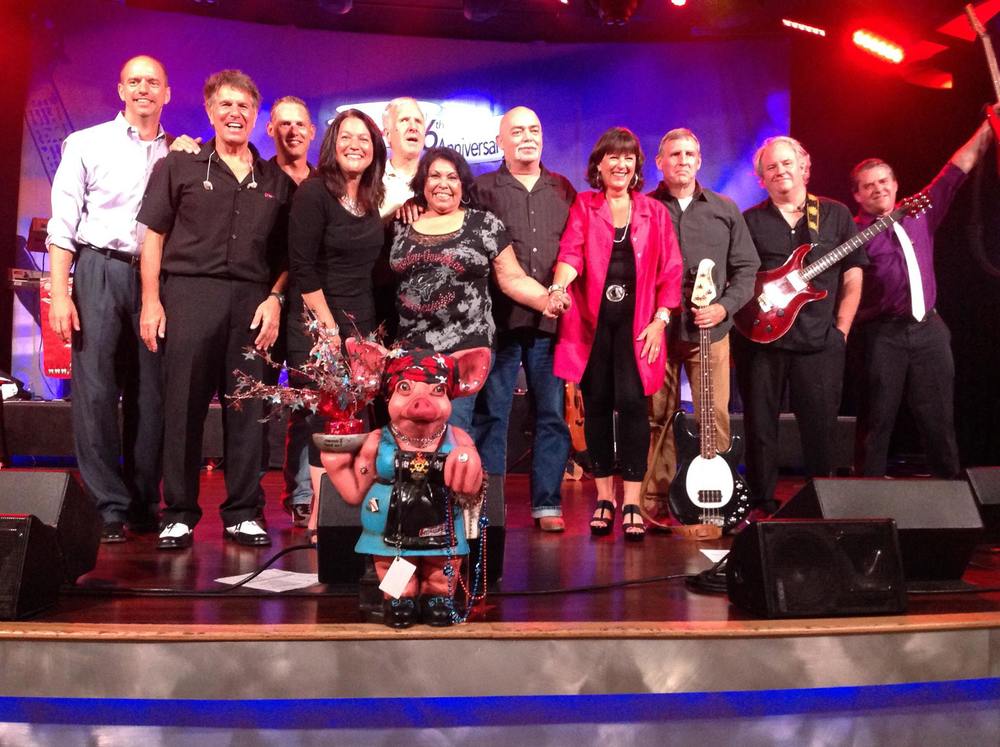
Many months ago, Izzy gave Paula Lorenzo-Tackett, director of Cache Creek Casino Resort in Brooks, California a business card for his band, 2nd Time Around.  There are countless bands called 2nd Time Around, or in my band’s case, “Second Time Around,” and lo and behold, after searching on-line for a while, Ms. Lorenzo-Tackett happened upon the website of a band from Barringon, Illinois, liked the promotional video, and decided to ask them to perform at the sixth anniversary celebration of her restaurant, the Road Trip Bar and Grill of Capay, California.

My bandmates and I didn’t quite understand the request.  We are a very good classic-rock band, to be sure, but performing around the Chicago area these past several years has taught us nothing if not a healthy dose of humility.  There are many, many good bands out there, and we know that our performances can always be improved, our transitions and endings made tighter, our stage-presence refined, and we know that there are countless amazing performers within the California border.  So it was with a degree of skepticism that we accepted the invitation to fly out to the West Coast, all the while wondering if it was too good to be true.

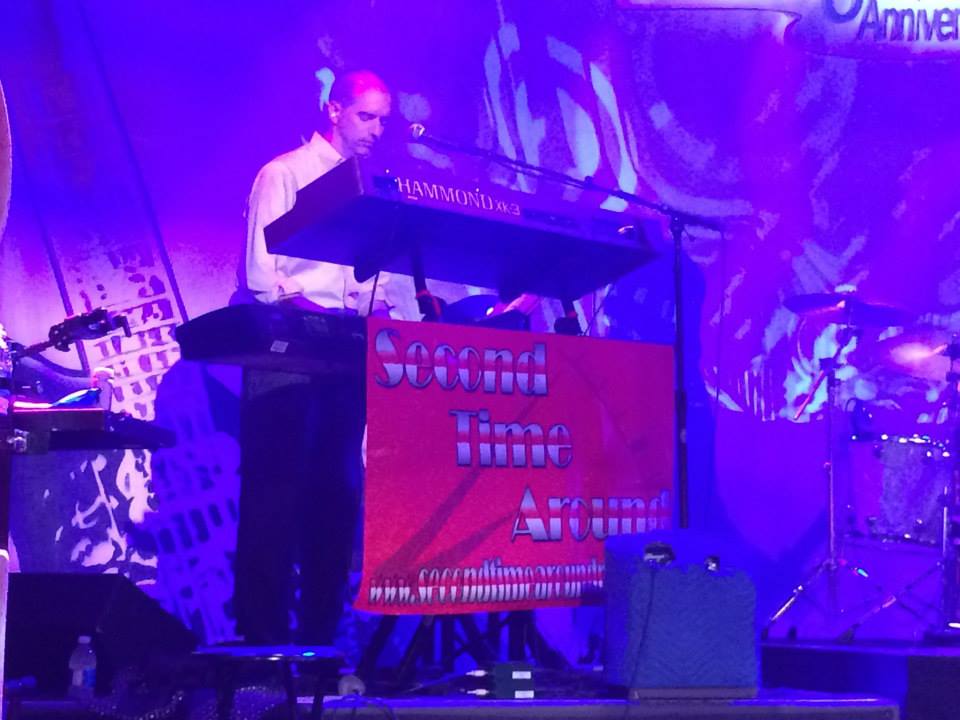
It wasn’t.  For two days we were treated like royalty, as Ms. Lorenzo-Tackett flew with us on a chartered jet to Sacramento, accompanied us on a stretch limo to her restaurant and casino, and then treated us to a state-of-the-art stage, lights and sound system, not to mention a wonderful stay at the beautiful Cache Creek Casino Resort.  The Entertainment Technical Manager at the casino, James Taylor, told me stories about his time working with Amy Grant and Blackfoot, and how when he got the call to work at Cache Creek he couldn’t turn it down because it was evident that the ownership believed in doing things the right way.  Strolling along the runways on the theater’s perimeter, I glanced at the photos of other performers who have graced the stage at Cache Creek – Ringo Star, Melissa Etheridge, Jay Leno, Smokey Robinson, etc. – and it was clear that doing things the right way had led to some wonderful performances.  And here we were, a cover band from Chicago, getting to play in front of 475 people in a spectacularly-decorated room with several audio and video experts working diligently to coax as good a performance out of us as possible.

For three sets, we performed our hearts out, hoping we would do right by the folks at Cache Creek, and ultimately, we think we did.  We had a blast, the crowd danced and yelled for more, and Paula and her husband Jerry gave us high praise.  Whether or not we were deserving of it, we didn’t know.  We just knew we had given it our all.

The leaders of Second Time Around, Johnny and Angie Fridono, are believers in karma.  Treat people right, and you’ll be treated right.  I’ve only been in the band for the past year, so I feel like I got to ride the coattails of decades of Johnny and Angie treating people right.  Who knew when I responded to a “keyboardist wanted” ad last year that it would lead to such an incredible journey?

At the show’s end, there was Izzy, clapping his hands in front of the stage.  I introduced myself, and he said, “I’m in a band called 2nd Time Around too, and I’m the reason you’re here!”  He told me the story, and I wondered if he was going to be bitter about seeing a different band perform where his band had hoped to play.  But Izzy said graciously, “You guys are TEN TIMES better than we are.”  Izzy seems like another guy who treats people right, and I hope that karma catches up to him sometime and offers him the gig of a lifetime.

Ringo's Drum Fill Returns!

Back in December of 2010 I wrote a blog about Ringo Starr’s signature drum lick: two sixteenth notes on the one beat, followed by a sixteenth rest, followed by four or five more sixteenth notes.  Here's how it sounds:

Since then, I’ve heard this drum lick many times over from other drummers: some Ringo’s contemporaries, others more modern drummers who weren’t even alive when John Lennon died, much less when The Beatles were in full-throttle mode.

Consider this perfectly placed addition to the 2013 song “The Vampyre of Time and Memory” by Queens of the Stoneage:

Or the lick at 0:13 in Stone Temple Pilots’ “Plush”:

John Bonham uses a slight variation of the lick at 1:51 in Zeppelin’s “Thank You”…

 …and Don Henley uses it ad nauseam  in “Victim of Love” (but since The Eagles are and have always been about the money, their song isn’t up on youtube, and I’m not prepared to give them even one dollar of my money).

Ringo Starr may not have invented the lick, but he (along with Paul McCartney in “Dear Prudence”) certainly put it in the minds of drummers going forward.  See if you recognize any of the songs in the following montage:

So there you go.  Long live Ringo!

Rush Recap: 20 Albums in 20 Days

Well, it sure has been a fun journey.  Rush is a band that for forty years now has pushed the envelope, evolved with the times, challenged themselves, and produced some terrific albums.  Simply put, there isn’t one original album they’ve released that doesn’t have some redeeming qualities.  Even the worst Rush (except for Feedback) is better than many other bands’ best efforts.

Comparing all twenty albums is a bit ridiculous, because it’s like comparing four or five bands in one.  It’s like contrasting The Beatles of 1964 to The Beatles of 1968 (and that there’s only four years separating “She Loves You” and The White Album is absolutely mind-boggling to me).  When I’m in the mood for progressive Rush, A Farewell to Kings is the ultimate album for me.  A more poppy Rush?  Presto fits the bill.  Something in between, then Permanent Waves is just about perfect. A more rocking album, and you can’t go wrong with Counterparts or Clockwork Angels.  And if you want down-home blues rock, then Rush ain’t too shabby. 

Nonetheless, I will put in order all twenty albums, recognizing that moods and tastes can change on yearly, if not daily, basis.  Suffice it to say that my top five albums will probably be more or less consistent, and my bottom five albums are likely to stay the same (and even some of those aren’t all that bad).  Everything in between is open wide for debate depending on the day.  Here goes…

Rush Permanent Waves.jpg

#1 Permanent Waves.  Aside from a few production quibbles, a perfect album, the ultimate blend of accessible, exciting rock and roll, thought-provoking ballads and complex, progressive pieces.  

Rush Farewell to Kings.jpg

#2 A Farewell to Kings.  Such an interesting, exciting album, full of intricatacies that keep the listener's attention, yet still melodic and accessible with some wonderful shorter pieces.

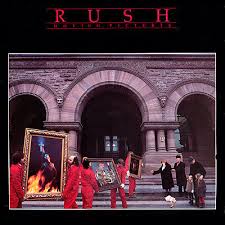
Rush Moving Pictures.jpg

#3 Moving Pictures.  Side two wavers just a bit, but side one is among the most perfect album sides ever recorded.  It's also a standout for it's clean yet full production.

Rush Presto.jpg

#4 Presto.  An accessible album that still has a bit of an edge to it.  Exciting and moving, with some especially poignant lyrics by Peart.  The band wishes they could record this album again.  I have no idea what they would change.

Rush Hemispheres.jpg

#5 Hemispheres.  A close second to its predessessor for best progressive album by Rush. The band manages a couple of short pieces as well, along with their best instrumental (or is it YYZ?  Close call).

Rush Test for Echo.jpg

 #6 Test For Echo.  Yeah, I could have picked Counterparts, and maybe should have.  Both are great albums as Rush began to explore a harder-edged sound.  This is an oft-overlooked album that deserves a second look

Rush Roll the Bones.jpg

#7 Roll The Bones.  Good almost from start to finish, with relatable lyrics about fate and chance.  Don't think it belongs here?  Think again.  

Rush 2112.jpg

#8 2112.  The first side is almost as good as Moving Pictures' first side.  A near-perfect epic.  Side two not as much, but a terrific album that turned things around for the wavering band.

Rush Counterparts.jpg

#9 Counterparts.  A great album whose middle sections loses it just a bit for me.  "Double Agent" gets my vote for the worst original Rush song ever recorded.  Holy crap.

Rush Clockwork Angels.jpg

#10 Clockwork Angels.  That Rush can still produce an album of this quality is remarkable.  A great effort, with shifting moods and instrumentation, with melody and riffs to boot.

Rush Grace under Pressure.jpg

#11 Grace Under Pressure.  One of those albums that used to bug me.  I still don't like "Afterimage," but oh well.  A great bridge between guitar-Rush and synth-Rush.

Hold Your Fire.jpg

#12 Hold Your Fire.  A great poppy album with inspiring lyrics.  The band may vote for "Tai Shan" is its worst song, but I accept it as a mild hiccup on a terrific effort.

Rush Signals.jpg

 #13 Signals.  A better album than I expected, with some songs I'd forgotten about and perhaps didn't appreciate years ago.  Men and boys rule the album - be them digital, analog or new world.

Rush Rush.jpg

#14 Rush.  A surprisingly good effort, with ridiculous lyrics but oh so sweet riffs and guitar solos.  Better than most of the rock drivel that sold millions in the 70s.

Rush Power Windows.jpg

#15 Power Windows.  Some wonderful tracks that suffocate under the weight of exhausting synth-heavy production.  I'm a keyboardist, and I know a thing or two about the synthesizer, but this goes way over the top.  "Territories" is the standout here.

Rush Fly by Night.jpg

#16 Fly By Night.  Yes, a few hiccups here and there, but some terrificly accessible rock songs and a few lengthy numbers that set the stage for what's to come. 

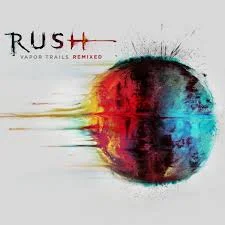
Rush Vapor trails.jpg

#17 Vapor Trails.  A tiring, endless album that sabotages its finest moments with terrible sections.  The first two tracks save this album from last place. 

Rush Caress of Steel.jpg

#18 Caress of Steel.  Some interesting parts, but ultimately an inconsistent release.

Rush Snakes and Arrows.jpg

#19 Snakes and Arrows.  I know several Rush fans who would put this album in their top five.  For me it's an endless, morose, unvarying effort.

Rush Feedback.jpg

#20 Feedback.  Absolutely pointless and unredeeming.

 So there you are.  Disagree?  Chime in and let me know.  After all, Rush fans can disagree.  As Peart penned, "Everybody got to deviate from the norm."

Copyright, 2026, Paul Heinz, All Right Reserved