Paul Heinz

Original Fiction, Music and Essays

Filtering by Category: Music

20 Rush Albums in 20 Days: Grace Under Pressure

DAY FIVE: Rush, Grace Under Pressure, running time 39:12, released April 12, 1984 (my 16th birthday)

No Rush album captures the feel of a time period the way Grace Under Pressure does, taking us to an era of Reagan and Gorbachev, The Day After, War Games and general paranoia about what lay ahead.  It’s a feeling that might not lend well to an enjoyable listen, and indeed, the entire first side of Rush’s tenth album is in a minor key with production that sounds like cold, stainless steel.  Luckily, just as the album starts to labor under its own weight of self-importance, side two comes to save the day

Rush recruited Peter Henderson to help with production after parting ways with long-time producer Terry Brown, and the results are mixed.  Some of the choices are extremely unsatisfying.  Half way through listening to “Afterimage” I had the sneaking suspicion that Journey’s ”Separate Ways” must have been playing on an endless loop in the control room prior to recording this song.  Terrible synth choices, and for me, the weakest song on the album by far.  The instrumental breaks of this tune and the following track, “Red Sector A,” are among the most unsatisfying of any Rush song.  True, Alex Lifeson doesn’t need to have a guitar solo on every song, but instrumental sections also have to lead somewhere.  Here, they remain stagnant, serving as little more than time filler.

The opening track, “Distant Early Warning,” still holds up well, and the lyrics “You sometimes drive me crazy – but I worry about you” have never resonated more to this father of three.  The dreary mood of side one gives way to a refreshing set of songs on side two that alter the feel of the album just enough to provide a welcomed second wind.  “Kid Gloves” is a fun tune, and one that I would have expected to become a mainstay in Rush’s setlist, but it hasn’t been played in concert since 1984.  Go figure.  Rush added “The Body Electric” to its most recent tour, and I thought it was a refreshing addition.  Yes, the chorus is a little cheesy, but I’ve always been a fool for cheesy songs.  “Red Lenses” is one of those tracks that inspires a heated reaction.  My son hates the song, and from what I’ve read on-line, many other Rush fan feel the same.  I love it.  And though a guitar solo is avoided yet again on this tune, the instrumental passage works, offering a change in feel instead of just droning on the way other tracks from this album do.  "Between the Wheels” ends the album where it began, in an ominous minor key, as if to remind the listener that despite the mild humor of the previous song, things really aren’t okay.  As if we needed reminding.

Lifeson's guitar work on Grace Under Pressure is very interesting.  I comare his crunchy, clean upbeats on "The Enemy Within" to his work on "Vital Signs" three years earlier, and it's apparent to me that by 1984 he'd found his footing, managing to make the guitar relevent even in the evolving sonic landscape of the 80s.  His contribution, both innovative and subtle, warrants repeated listenings.

Grace Under Pressure benefits from it's short length.  One more tune – especially a tune in a minor key – would have put it over the edge.  As it stands, it's a decent, if imperfect, album.

Tomorrow, I’ll be listening to…drum roll, please…number 1!  The debut album.  Back to the basic blues/rock band with banal lyrics.  This ought to be interesting…

20 Rush Albums in 20 Days: Fly by Night

DAY FOUR: Rush, Fly By Night, running time 37:38, released February 15, 1975

Rush hit paydirt when they recruited Neil Peart to take over drumming duties from original member John Rutsey.  Not only did they inherit a drumming virtuoso, they found a new lyricist – arguably the more important contribution of the two – whose writing would match the musical exploration that was to follow.  Except for a few lingering songs penned by Lee and Lifeson, lyrics would now be the responsibility of Peart, and gone would be the days of “Hey baby it’s a quarter to eight.”  It was a necessary change. 

I am no longer a fan of the high screeching vocal style of early Geddy Lee, and as a result it’s difficult for me to enjoy the first several Rush albums on the same level that I once did.  Indeed, the best songs on Rush’s second album, Fly By Night, are those in which Geddy uses the lower register that would become so familiar in the 80s.  “Making Memories” and “In the End,” in addition to being good songs, both serve as a respite from the shrieking onslaught of Geddy’s vocals.

Still, some of the other tunes are infectious with their complicated grooves and melodic phrases, and Neil’s drumming is so strong that I get the feeling Lee and Lifeson felt unhindered for the first time, able to follow whatever direction their musical imaginations might take them.  “Anthem” begins the album with a vengeance, and it’s apparent with the first lick that this is not the same Rush that recorded “Working Man” just a year before.  Both “Fly by Night” and “Beneath, Between, Behind” are terrifically catchy tunes with great riffs, but the band really misses the mark on three other tracks.  “Best I Can,” written by Lee, is a throw-away song that sounds like a reject from Rush’s debut album.  “Rivendell” is a two minute tune that does on for nearly five minutes with no forward movement.  In effect, it’s a journey that goes nowhere.  And then there’s “By-Tor and the Snow Dog,” a tune that many Rush fanatics love, but for me is overbearing and obnoxious.  In addition to going on far too long, it overshadows Lifeson’s significant guitar work with an incessant and unpleasant “growling” effect created by Lee (and multiple effects).  Yes, I know.  It’s supposed to represent the growl of By-Tor.  I get it.  But it doesn’t make for good listening.  Rush played excerpts from this song on their Vapor Trails tour, and I thought it worked well on that level, but listening to the entire tune isn’t a journey I’d like to repeat anytime soon.

Fly By Night offers glimpses of what the band would become, and while not perfect, its high points still outweigh the low ones.  But better things lay head.  I'm not sure where this will fall when I rank the albums 1 through 20 in another 16 days, but I would suspect somwhere in the bottom half.

Tomorrow, I’ll be listening to…drum roll, please…number 10.  Back to the 80s we go with Grace Under Pressure.  Let’s see if the bridge from the guitar-based Rush to the synth-based Rush holds up well.  Stay tuned…

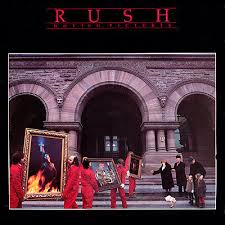
20 Rush Albums in 20 Days: Moving Pictures

DAY THREE: Rush, Moving Pictures, running time 40:02, released February 12, 1981

So here it is, what many consider to be Rush’s best effort, the album the band themselves played in its entirety throughout their 2010-2011 tour.  Moving Pictures.  So the questions is: does it hold up? 

Um…yeah.  Or…at least half of it does.  Part of it is a masterpiece.  And yet…

Upon listening to it front to back, the first thing that struck me – especially after listening to Hold Your Fire and Presto the previous two days – is just how clean and uncluttered Moving Pictures sounds.  The band was still very much insistent on recording what they could reproduce live, and the result is a crisp mix in which each instrument shines brightly.  Consider Lifeson’s solo on the opening track, “Tom Sawyer.”  Whereas in later years Rush would have added a keyboard part and two additional guitar tracks to emphasize certain moments, here we get the band at its most basic best: a well-executed solo over the clean bass sound of Geddy Lee and the brilliantly recorded “snap” of Peart’s drums.  Perfect.  I’ve heard that Rush were influenced by The Police, and though the music is of course completely different, I can see how the production on Moving Pictures might have been inspired by albums like Outlandos d'Amour and Reggatta de Blanc.

The first side of Moving Pictures is among the best twenty minutes ever recorded.  It has the band’s best instrumental (“YYZ”), among its most melodic songs (“Limelight”), the most identifiable and spirited story (“Red Barchetta”) and, of course, what many believe is the band’s quintessential track (“Tom Sawyer”).  My friend and I used to make fun of Lifeson’s wailing guitar solo in “Limelight,” thinking it completely out of character with the rest of the tune.  Now I think it’s a stroke of genius.  I guess thirty-three years can do that to one’s perspective.

Not so with Lifeson’s work on the closing track of the album, “Vital Signs.”  Here his guitar choices are sloppy and uncertain – not to mention overbearing – almost as if he didn’t know what to do with this foreshadowing of the direction Rush would travel over the next four albums with keyboards taking center stage.  Lifeson would evolve into this role nicely over the next decade.  Here he’s still finding his legs, and the song suffers as a result.

During side two, I enjoyed “The Camera Eye” despite the dated synthesizers, though it does go on too long.  Then I got to “Witchhunt,” a track that for me surprisingly labored under the weight of self-importance and overall drudgery.  I couldn’t help but picture Spinal Tap parodying the first verse of this song: The night is black without a moon/The air is thick and still/The vigilantes gather on/The lonely torch lit hill.  Christopher Guest could have worked wonders with this tune, along with a dancing witch galloping around a black cauldron.  Can’t you picture it?

These are minor quibbles.  Moving Pictures is an excellent album.  Perhaps not as perfect as I remember it, but damn good.  It should not go unnoticed that this album runs at just over forty minutes.  Countless bands would do well to remember that the greatest albums ever recorded stop at around the forty minute mark (or well before).  If Rush had recorded this album just six years later, they would have added two additional tracks, likely encumbering the overall package.  Less is sometimes more.  Just because you can fill 60-70 minutes of a CD doesn’t mean you should (when Aerosmith started releasing albums lasting over an hour – 1993’s Get A Grip – you just knew that things had gone too far).

Tomorrow, I’ll be listening to…drum roll, please…number 2.  Talk about a stylistic change!  Fly by Night is on the docket for tomorrow (only 37 minutes long, too!).  Can’t wait.

20 Rush Albums in 20 Days: Presto

DAY TWO: Rush, Presto, running time 52:16, released November 21, 1989

I’ll never forget the first time my roommates and I heard the new Rush song “Show, Don’t Tell” in fall of 1989.  After the brief drum and synth intro, suddenly there it was: the return of Alex Lifeson.  Rush was back.

The change from Hold Your Fire to Presto is enormous, mostly in terms of production.  Geddy’s penchant for memorable melodies is still in full-force and Neil’s lyrics are relatable and clever, but whereas keyboards were clearly a writing tool for their previous album, on Presto, aided by newly introduced Rupert Hine’s production, keyboards are used to color the sound and not as a lead instrument (except on “Red Tide” and “Available Light.”).  Hearing it with fresh ears, the album still holds up very well.  Unlike its predecessor, Presto doesn’t sound like a somewhat unfortunate 80s relic.

I recall being unhappy with the chorus of the title track back in 1989, thinking the song’s verse’s had been so perfect that the lift required to take the song to the next level was regretfully absent.  With older ears, I no longer consider the chorus a letdown, but rather a terrific example of how music can effectively reflect a song’s lyrics.  As with all of Rush’s releases since 1987, the album suffers a bit from being overlong.  Listening to it front to back, I think that the album could end happily with Neil’s terrific lyrical contribution “Anagram (for Mongo),” perhaps tacking on “Available Light” for a poignant conclusion.  But “Red Tide” and “Hand Over Fist” wear thin.

Presto has been perplexingly unrepresented on Rush’s tours (though perhaps less so after reading Neil Peart’s comments about Rush’s unhappiness with the effort).  Even the 1990 tour only included five songs from the album (compare that with the Snakes and Arrows and Clockwork Angels tours when Rush performed nearly the entire albums), and since the Counterparts tour only “The Pass” and “Presto” have squeezed into the setlist.  I recall seeing the tour at Alpine Valley, WI, and the only song from the album that really bombed was “Scars.”  This is an acceptable album track, but one that should have ever been played live with its multiple pre-recorded tracks.

Back to Neil Peart’s comments, he’s reported to have said that if Rush could redo one album, Presto would be it, as they feel it should have been much better given the material they had to work with.  I’m not sure what they would do differently.  It’s still early in the listening of twenty albums in twenty days, but I expect Presto to be ranked highly in my final tally.

Tomorrow, I’ll be listening to…drum roll, please…number 8.  Well, here it is.  Considered by many to be Rush’s magnum opus.  Moving Pictures.  We’ll see if it still holds up.

20 Rush Albums in 20 Days: Hold Your Fire

DAY ONE: Rush, Hold Your Fire, running time 50:30, released September 8, 1987

While attending Berklee College of Music in 1987, I picked up my first Rush CD (previous purchases had been on vinyl), the newly released Hold Your Fire.  Midway through the album, the guitarist from across the hall inquired about Alex Lifeson’s playing.  I couldn’t lie.  It was almost unnoticeable.  To say Lifeson’s playing on Hold Your Fire is understated would be an understatement.  It’s not only that his guitar parts are less busy than on earlier records (notice the non-solo guitar solos on “Time Stand Still” and “Mission”), it’s also that his guitar sound is so clean and pure and pushed so far back in the mix.  This trend really began with 1982’s Signals, when Lifeson changed his contributions to the band, taking a backseat to Geddy’s keyboard prominence, and Hold Your Fire would cap off this period (captured on the live A Show Of Hands).  Beginning with the next release, Presto, Rush gradually yielded to a heavier guitar sound. 

Despite the change in the band’s sound in the 80s, Rush continued to pump out a quality product.  Sure, some of the synths sound a little dated today – ”Second Nature” is a fine tune, but somehow regrettable in retrospect – but much less so than a lot of what the 80s produced, and the musicianship of Rush’s three members continued to elevate their product above the din of most bands.  Geddy was very much a melody guy at this point in his career (vastly different from more recent albums), and even on songs when the production seems over the top, the tunes themselves are hummable, almost pop-like in some cases.  Aside from “New Word Man” off of Signals, I would argue that there isn’t a poppier Rush song than “Prime Mover” (and a damn good one too, in my opinion.  Best song on the album).

Hold Your Fire includes what Lee and Lifeson have reported as their least favorite Rush Song, “Tai Shan,” and though I still like the song, the album, running at 50 minutes plus, could probably have benefitted from cutting this one.  Since the Hold Your Fire tour, only three tracks from the album have been played in concert, which is too bad.  Rush has a tendency to lean on familiar territory in live performance, but I for one would love to hear a track like “Prime Mover” or “Turn the Page” live. 

The album’s closer, “High Water,” finishes off the CD with a resounding lift, even employing a cheesy modulation for effect (think Barry Manilow), but it works.  I buy into this kind of manipulation hook, line and sinker if it’s done well, and for me, Rush in 1987 did enough well to warrant our attention.  They created excellent melodies with sub-optimal production.  I think if they had to do it all again, they would reproduce this album to make it a little less synthy and a little heavier, with more crunch, more force and more low end.

But still, not too shabby of an effort.

Tomorrow, I’ll be listening to…drum roll, please…number 13.  Aha!  Rush’s very next album, the aforementioned Presto.  It’ll be interesting to hear what changes took place in the intervening two years.  Until then...


Copyright, 2026, Paul Heinz, All Right Reserved